Regain Control of Your Body Through SOM
What if your aches, tightness, or instability weren’t just “part of getting older”—but a brain working with limited options?
What we think of as the constraints of aging are often just our baseline sensorimotor patterns. Patterns our bodies have learned through repetition—how we sit, how we stand, how we move, and how we compensate when something doesn’t feel right.
Over time, those patterns become automatic.
But they’re not fixed.
They can be relearned.
A Simple Protocol: SOM
I use a simple protocol called SOM:
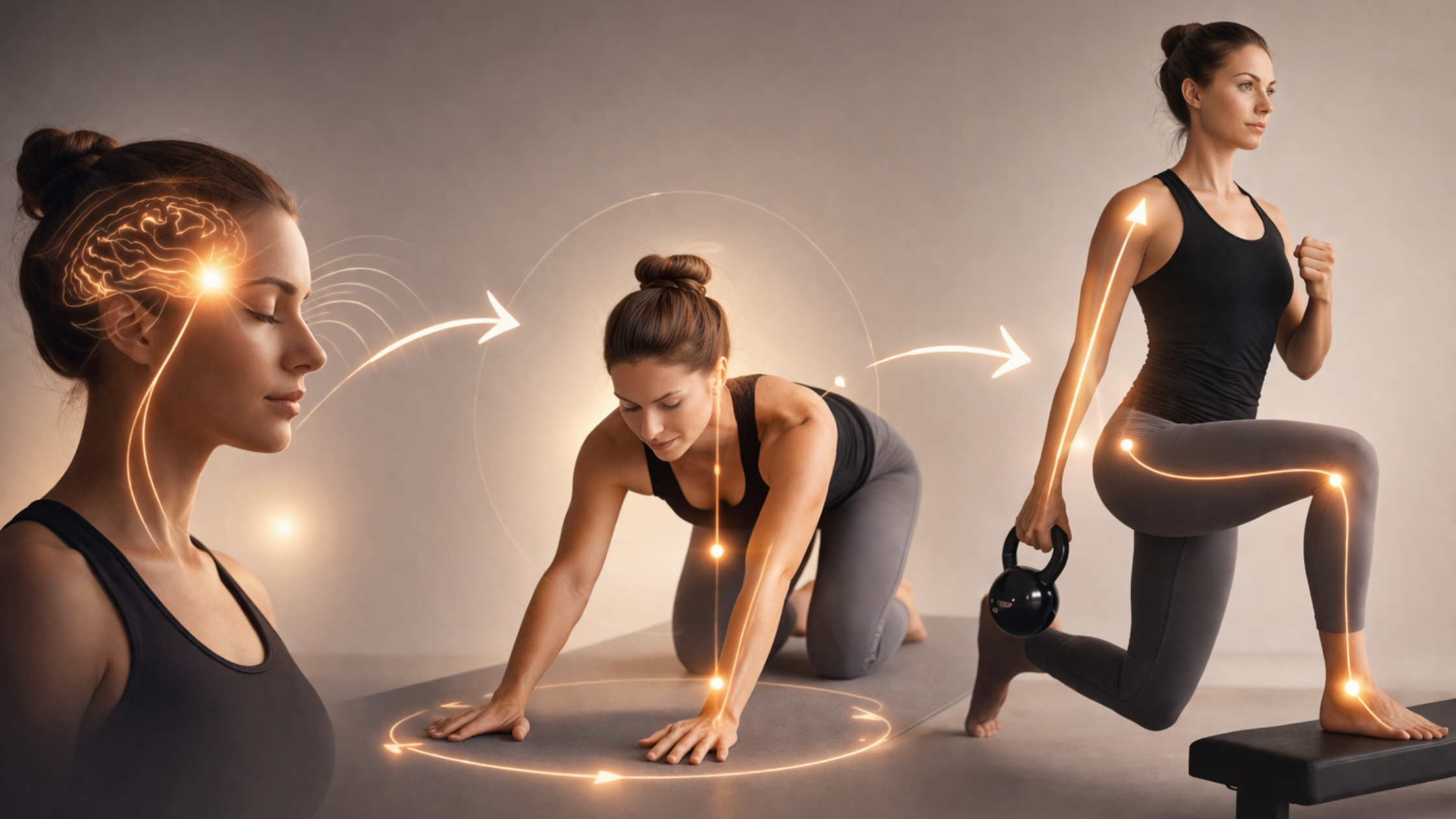
Sense. Organize. Move.
With SOM you can unlearn dysfunctional patterns that cause pain, degeneration, and inefficiency, and discover a way of working with your brain and body so movement actually starts to make sense again.
Three simple steps:
Sense
Are you sure your brain is connecting well to the muscles you’re firing to execute a movement?
Shockingly, if you have compensations patterns, you may not even know.
If you can’t feel something clearly, your body will guess. And when it guesses, it usually relies on the same areas that already do too much—your back, your shoulders, your hips.
The solution is to slow down and focus inward.
We pay attention to what signals are clear or fuzzy. Where there’s tension. Where there’s nothing. Where things feel controlled, and where they don’t.
That’s where change starts.
Organize
Once you can feel what’s happening, you can start to change the relationships between muscle groups.
This is where we reposition and reorient the body so things begin to support each other instead of compete.
Ribcage and pelvis.
Feet and hips.
Shoulders and trunk.
Instead of forcing muscles to “turn on” (which is just another inefficient strategy). we create conditions where they can.
Tension starts to redistribute, areas that were overworking begin to let go, and areas that were quiet start to participate.
The system becomes more balanced—not by adding unguided effort, but by improving organization.
Move
Now it’s time to move.
You’re working from clearer input and better organization, which means your output—your movement—is more controlled and more efficient.
This is where you start to layer things back in — load, speed, range, complexity— but only to the degree that you can maintain control.
We’ve now given the brain better options. It will simply choose the better option for itself and a more efficient pattern becomes our new baseline.
Why This Works
Your body doesn’t lose its ability to learn. It adapts to what it repeats.
If you keep repeating the same patterns, you get the same result—tightness, discomfort, instability, compensation.
If you change the pattern, the result changes.
This isn’t about fighting age.
It’s about giving your body better options—and enough clarity to choose them.
What It Feels Like
When things start to organize, the change is noticeable.
Movements feel more stable, tension isn’t pulling you in the same directions, and you don’t have to think as hard about what to do.
It feels more straightforward.
Where to Start
Most people don’t actually know what pattern they’re working with—they just feel the result of it.
If you want to start making sense of your body, that’s the first step. → Take the Body Quiz and see what pattern you’re working with.
From there, you can begin to apply SOM in a way that actually fits your body.
This is the foundation of how I teach, how I coach, and how I approach movement.
Not more exercises.
Better organization.