The Work Isn’t the Movement. It’s the Transition.
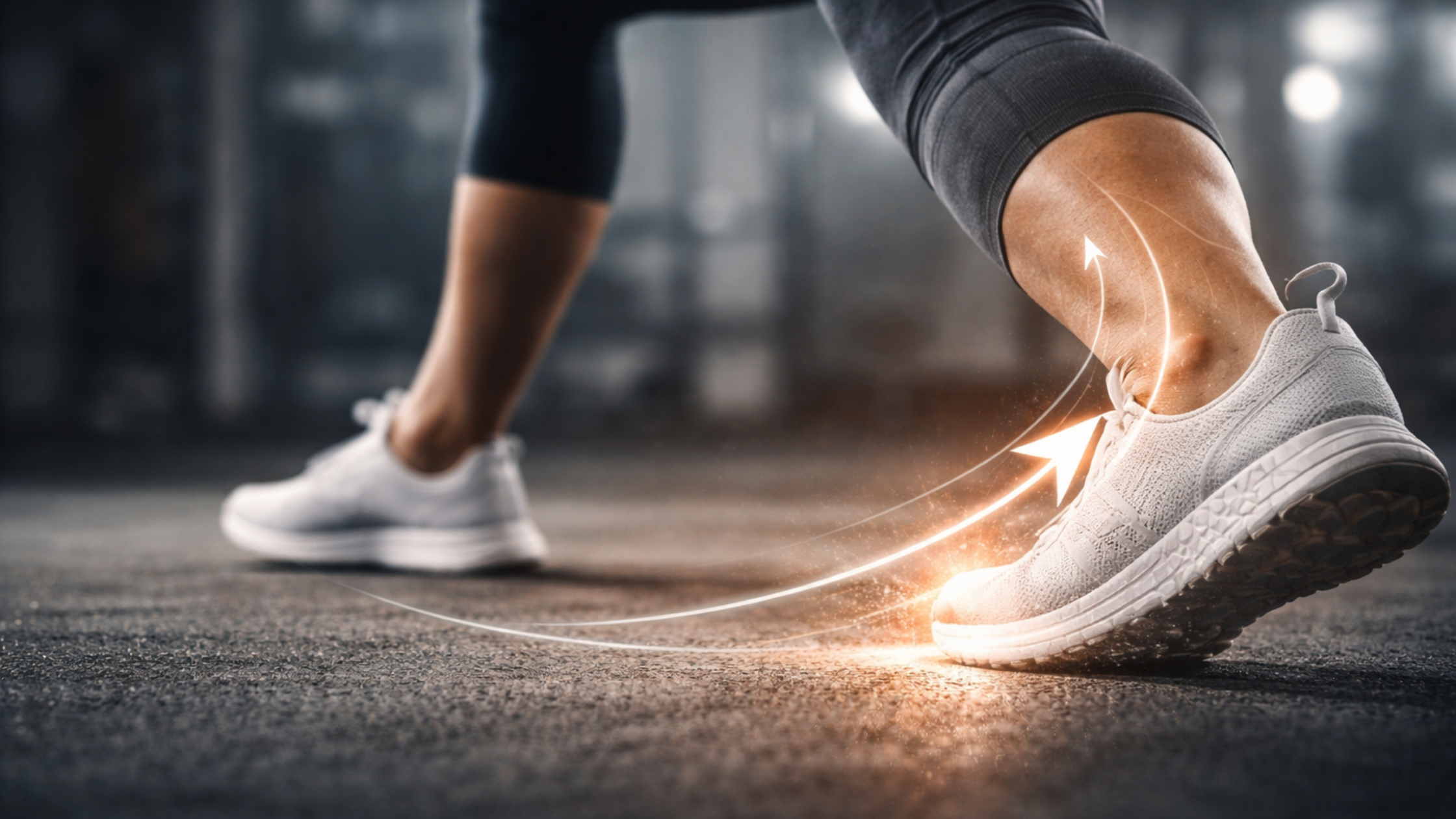
Most people think the movement is the work.
The rep.
The stretch.
The position at the end.
That’s what gets all the attention.
But if you’re trying to actually change your body—not just go through motions—that’s not where the work is happening.
The work is in the transition.
When you move from one position to another, your body is making decisions in real time
Where to put load
What muscles to recruit
What areas to avoid
What it trusts to hold you
Those decisions happen before you arrive anywhere.
By the time you reach the end of the movement, the strategy is already set.
This is why you can look like you’re doing an exercise “correctly”… and still reinforce the same pattern.
You hit the shape.
But you got there the same way you always do.
Your back stepped in.
Your hip avoided.
Your ribs lifted.
Nothing actually changed.
Fast Movement Hides Everything
When you move quickly, you skip over the most important part.
You don’t feel:
when the weight shifts
when the back grabs
when the hip drops out
when the body defaults to the same pattern
It all happens too fast to notice.
If you’re not feeling these shifts clearly, that’s not a focus problem—it’s a sensory one.
I wrote more about this here:
👉 You Can’t Control What You Can’t Feel
If you’re not sure what you’re feeling—or everything feels a little vague—
that’s usually a sign your body is running a pattern you haven’t fully mapped yet.
That’s exactly what my Body Quiz is designed to show you.
It helps you identify your dominant compensation pattern so you can stop guessing and start working with your body more precisely.
Slow Movement Reveals the Truth
Slow movement is about giving yourself enough time to feel what’s actually happening.
When you slow the transition, you start to notice:
where the load goes first
what turns on too early
what never turns on at all
where you lose support
That’s where the real work is.
Not at the end.
On the way.
You Won’t Always Feel the Compensation
Most people don’t realize that you can’t always feel when a compensation is happening.
Because to your brain, that pattern is normal.
It’s familiar. It’s efficient. It’s been running for years.
So even if you slow down, even if you pay attention— you might still miss it.
You might think:
“That felt fine.”
“I felt my glutes.”
“I stayed controlled.”
Meanwhile, your back subtly took over, your hip never fully accepted load, and your ribs shifted just enough to change the whole strategy.
You just didn’t catch it.
This Is Where Coaching Matters
This is why having trained eyes on you changes everything.
Not someone counting reps. Someone who can actually see patterns.
Someone who can:
spot where the compensation starts
guide you to reposition
recalibrate where you should feel the work
and track what’s happening above and below the movement
From your feet…through your hips…into your ribs…all the way up—and back down again.
Because your body doesn’t move in parts. It moves as a system.
A small shift in your foot can change your hip. A change in your ribs can take load out of your lower back. A subtle adjustment can completely alter what muscles engage.
But you won’t always see that on your own.
That’s where the feedback comes in.
Where Change Actually Happens
If you want to repattern compensations, you have to interrupt them before they finish.
That means catching the moment where your body starts to:
grip the lower back
raise the shoulders
avoid loading into the hip
lose connection through the feet
And choosing something different to interrupt the default pattern.
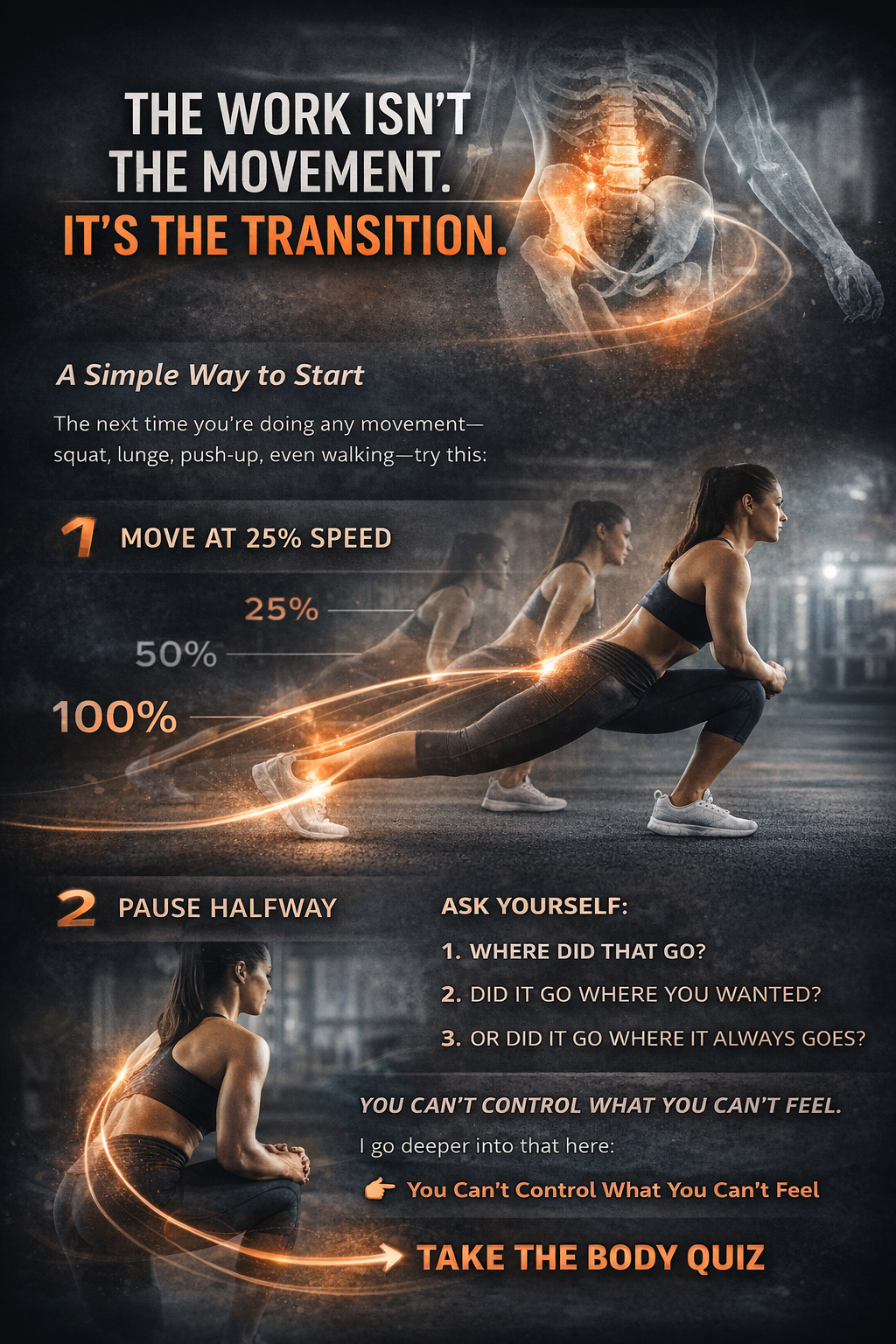
A Simple Way to Start
The next time you’re doing any movement—squat, lunge, push-up, even walking—try this:
Move at 25% speed.
Pause halfway.
Ask yourself:
Where did that go?
Did it go where you wanted?
Or did it go where it always goes?
If your answer is: “I don’t know” or “It depends”—you’re not alone.
Most people can’t clearly feel where things are going. That’s why they stay stuck.
That’s also why I built the Body Quiz.
It shows you your dominant compensation pattern—so you can stop guessing and start working with something real.
This Is the Difference
You can keep chasing positions. Or you can start paying attention to how you move between them.
One builds habits. The other rewires them.
If you want better form, more control, and a body that actually changes over time—Slow down.
Pay attention to the transition. That’s where your body is deciding everything.