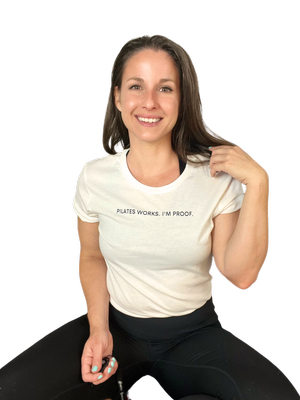
The 3Cs: The Learning Process Behind Better Movement
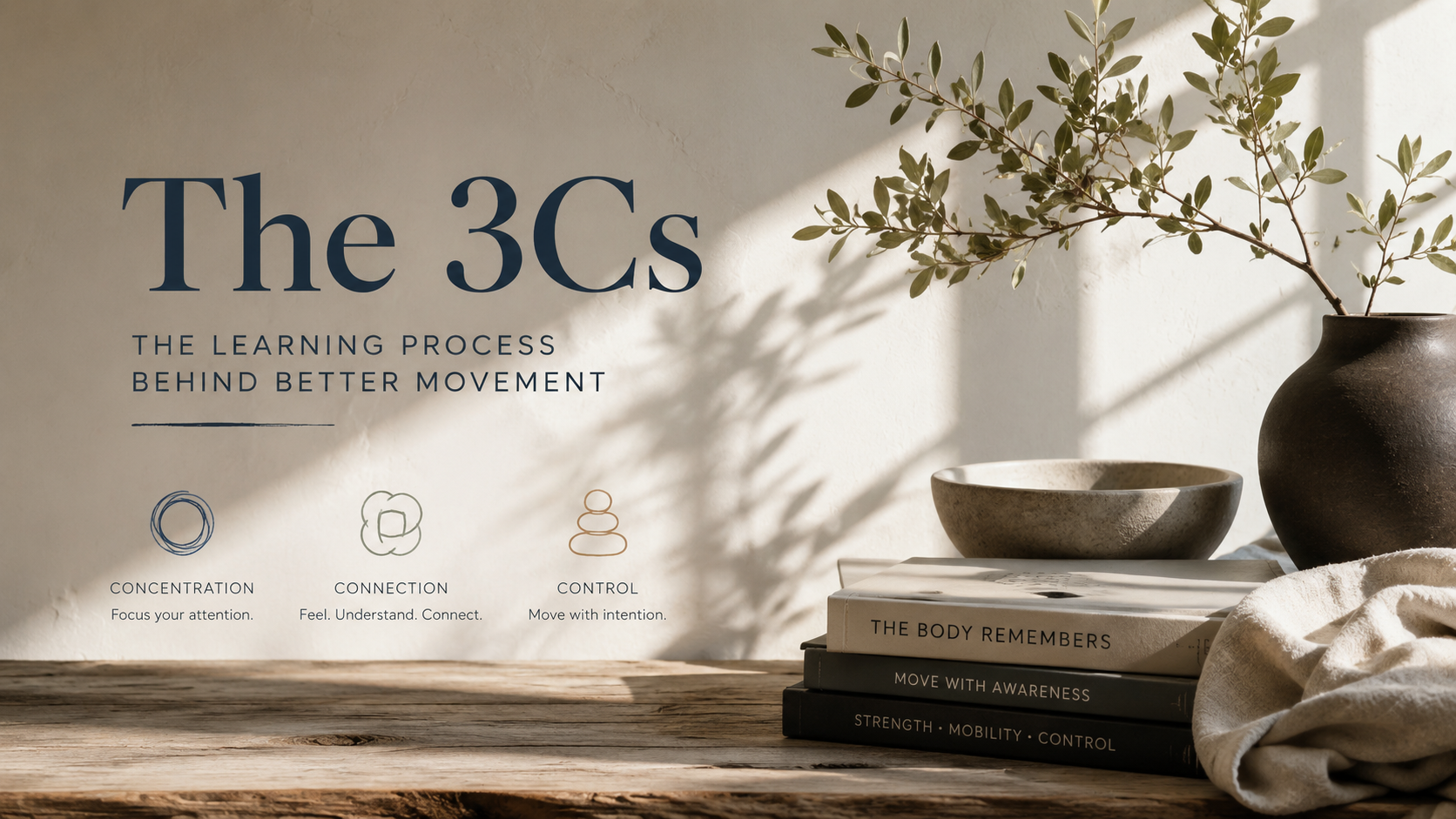
Through years of rehabbing my chronic back pain, I developed a method for regaining control of the body that I call the 3Cs: Concentration, Connection, and Control.
The 3Cs are more than just three words—they're a learning process. A roadmap that guides you from body disconnection and dysfunction toward awareness, coordination, and lasting control.
But I didn't arrive at this framework overnight.
I spent years struggling with compensations I wasn't even aware I was making—ways my body had, without my conscious awareness, figured out how to keep me moving despite imbalances, sensory blind spots, repetitive postures, old injuries, and the demands of work and sport.
From the outside, I looked functional. But underneath, my body was relying on countless workarounds that left me in chronic pain.
When I tried mainstream group fitness classes, I often found myself simply trying to keep up. The emphasis was on following the instructor, not understanding what my own body was doing. I compensated even more, my technique deteriorated, and I often left with more aches and pains than when I started.
I wanted something different. I wanted rigor. I wanted someone who would watch closely, demand precision, challenge my awareness, and teach me how to move with intention instead of momentum.
I found Pilates.
Pilates became my foundation, but it was only the beginning. As I studied movement science, worked with clients, experimented on myself, and continually questioned what I thought I knew, I uncovered deeper principles that extended far beyond any single exercise method.
I realized that lasting change isn't just about becoming stronger or more flexible. It's about teaching the nervous system new ways to perceive, organize, and control the body. It's about bringing unconscious habits into conscious awareness, unlearning inefficient movement patterns, and replacing them with new motor skills.
That journey taught me that real change follows a predictable process.
It begins with Concentration: learning to place your attention where it matters.
That attention creates Connection: the ability to clearly feel, organize, and communicate with parts of your body that may have been "offline" for years.
And from that connection comes Control: movement that feels effortless, efficient, resilient, and adaptable—not because you're trying harder, but because your nervous system has learned a better way to organize itself.
The 3C Method is a motor learning framework built on neuroscience. It uses focused attention, enhanced body awareness, and deliberate practice to help people improve proprioception, reorganize inefficient movement patterns, and regain conscious control of their bodies.
At its core is a simple idea:
You can't control what you can't sense.
Many people believe they're limited by weak muscles, tight joints, or aging. While those factors can certainly play a role, I often find that the missing piece is awareness. Over time, our nervous system develops habits and compensations in response to injury, repetitive postures, stress, and everyday life. These patterns become so automatic that we no longer realize we're doing them. The body keeps functioning, but it does so inefficiently—often creating unnecessary tension, pain, and wear over time.
The goal of the 3C Method isn't simply to strengthen muscles or stretch tight tissues. It's to improve the conversation between your brain and your body. Through focused attention, precise movement, breathing, and meaningful sensory feedback, you begin to recognize old habits, develop clearer body awareness, and build new movement strategies that feel more balanced, coordinated, and efficient.
As these new patterns are practiced, they become more automatic, allowing you to move with greater ease, confidence, and control.
This isn't about chasing perfect posture or performing exercises flawlessly. It's about developing the ability to understand your own body so that you can adapt, self-correct, and move well for the rest of your life. My goal is not to make you dependent on me—it's to give you the tools to become your own best movement teacher.
If you're living with persistent aches and pains, feel disconnected from your body, or simply want to move with greater confidence and control, I'd love to help. Together, we'll uncover the movement patterns holding you back, build new skills from the ground up, and help you develop a body that feels stronger, more resilient, and truly your own.
Movement is a skill. Like any skill, it can be learned, refined, and improved. It's never too late to begin.