Say Hello to Your Psoas
The maligned psoas — cast as villain or savior, when it simply wants to be understood.
If you’ve been stretching your hip flexors for years and your psoas still feels tight, this probably isn’t a flexibility problem. It’s an organization problem.
The psoas is often blamed for back pain, anterior pelvic tilt, and that constant pulling sensation in the front of the hip. But in many cases, it’s not the villain. It’s responding to a twisted or disorganized system.
Say Hello to Your Psoas
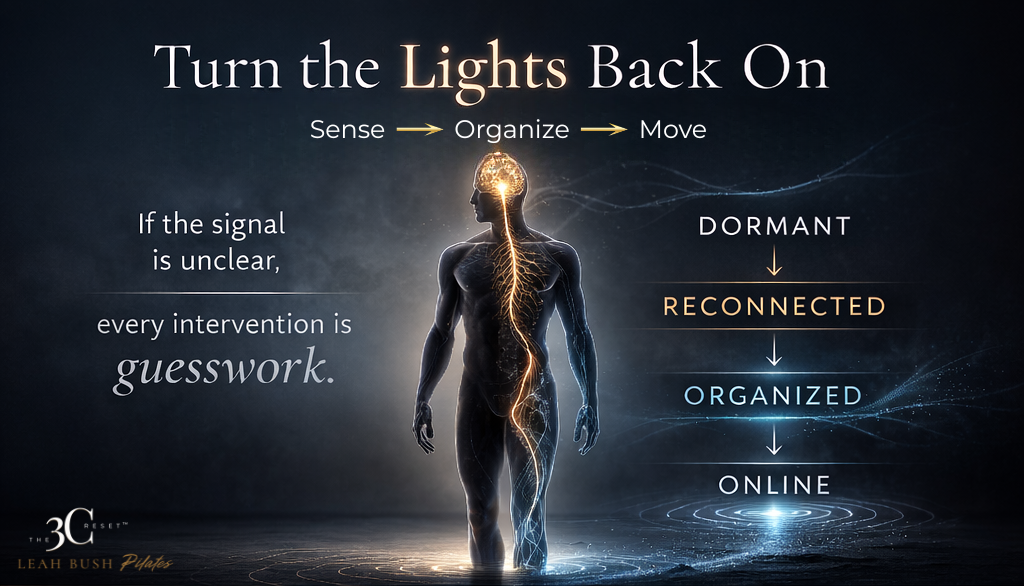
Most people try to fix their bodies by adding more — stretching, strengthening, mobilizing — without first restoring sensation. But if the signal between your brain and body is unclear, any intervention is just guessing in the dark. The “Say Hello to Your ____” series is about turning the lights back on: reconnecting to key muscles and pathways so you can organize them properly and move with clarity instead of compensation.
Psoas. So misunderstood.
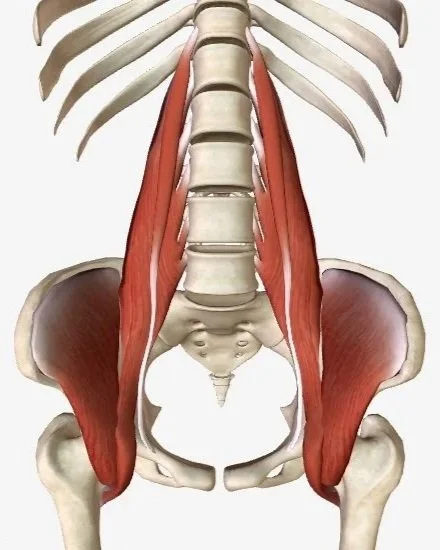
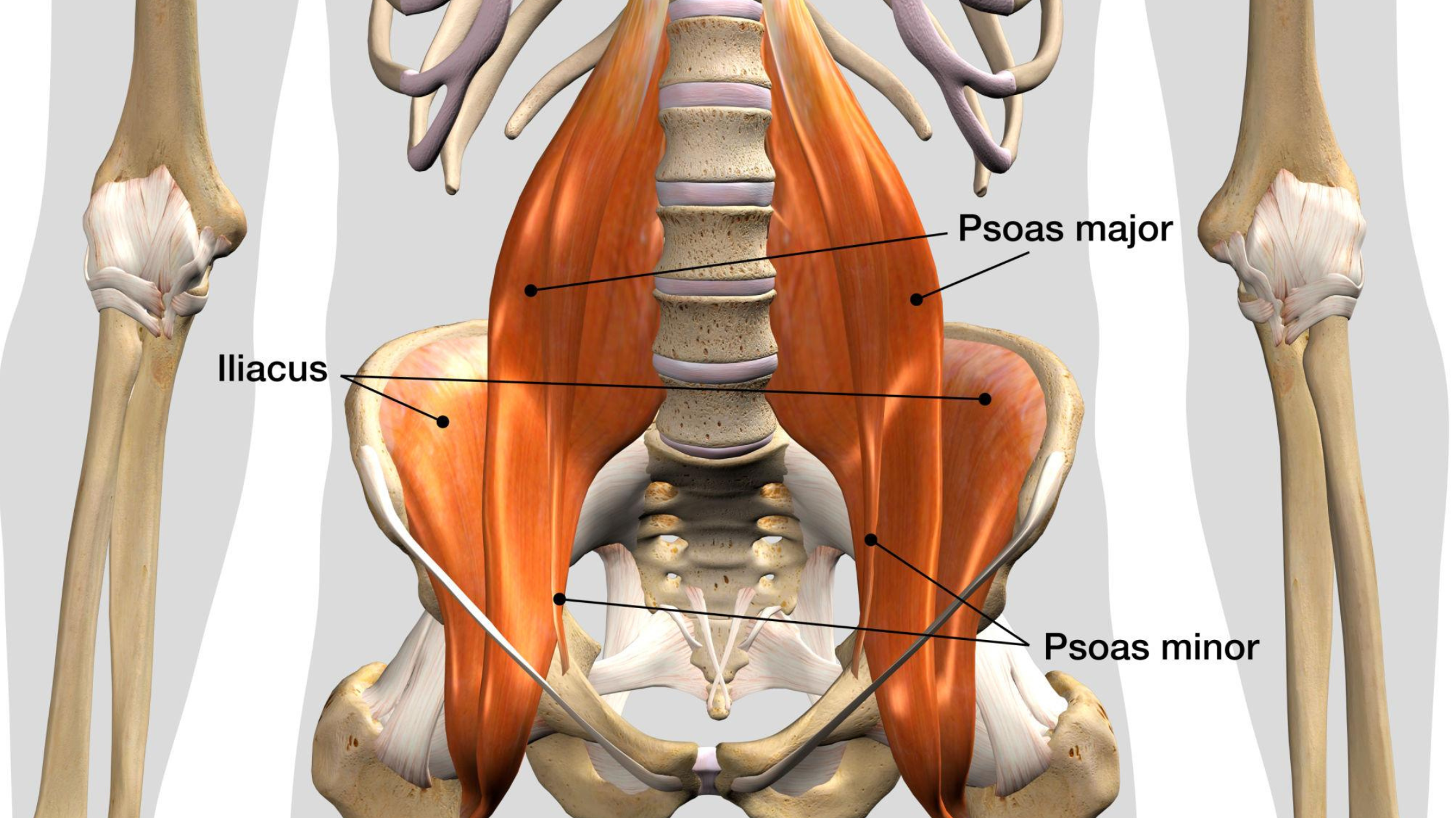
This is the iliopsoas — a group of muscles that blend together (the Psoas major and minor, and the illiacus) commonly shortened to “the psoas.”
It is the primary muscle that connects your spine to your legs. The bridge between upper and lower body. That alone should give you an idea of how important it is!
It’s been iconized as the “muscle of the soul” and the seat of our feeling of safety in the world. It’s also been villainized as a the cause of tight hips, sore lower backs, pelvic floor dysfunction, poor breath mechanics, anxiety — you name it.
The common advice? Stretch it. Massage it. Release it.
But that approach misses the point.
The psoas longs to be FELT.
It sits deep in the body, woven into the architecture of the lumbar spine and pelvis. It isn’t a superficial muscle you can roll into submission. And according to somatic educator Liz Koch in Core Awareness, direct myofascial release of the psoas isn’t even advised.
A Psoas that’s underused, overused, or used in the wrong way gives confusing signals to the brain. A trunk that isn’t centered. A pelvis that’s rotated. A lower back gripping to create stability. Outer muscles compensating for a deeper system that hasn’t come online.
The psoas isn’t a villian or a saint.
It’s a messenger.
What a Healthy Psoas Actually Feels Like
The goal is not to contract the psoas harder and it’s not to aggressively lengthen it.
The goal is a supple psoas — one that can dynamically lengthen and shorten, transmit force cleanly between spine and legs, and support the lumbar spine without bracing.
When it’s functioning well:
The front of the hips feel open, not compressed
The lower back feels relaxed, not tight
The pelvis feels centered left to right
Walking feels elastic instead of effortful
Your feet feel connected to the floor
When the trunk is disorganized, the body defaults to bracing. Over time you end up living slightly in fight-or-flight. Signal clarity drops, the brain loses its sense of midline, and deep safety erodes.
A supple Psoas is what allows your arms and legs to move without dragging the core along. It is crucial to maintaining the length and lift of high-quality tensegrity movement throughout all planes and joint actions.
Why the Psoas Is Called the “Sentinel of the Midline”
Renowned somatic educator Liz Koch describes the psoas as the “sentinel of the midline.” “A leg that moves from a supple psoas can flex, extend, rotate, and abduct without pulling on the core. When the psoas is vital, it influences not only movement, but the expression of the diaphragm and the felt sense of integrity and courage.”
In other words, this muscle doesn’t just move you. It organizes you.
But how do we find it through all the noise?
How I Learned to Feel It
For a long time, I couldn’t feel my psoas at all. My trunk was twisted. My pelvis wasn’t centered. There was nothing clear to connect to.
So I stopped trying to force it — I realized sensation had to come before activation.
I untwisted my ribcage and shoulder girdle. I allowed my pelvis to settle evenly left to right. I lined up my lateral connections so the sides of my body felt long instead of torqued.
Only when my structure was organized did sensation begin to show up in my Psoas as I visualized its location and focused my mind on connecting to and feeling those areas. Slowly I started to move through joint actions at the hip, sliding out my heel, extending the leg, encouraging a sense of openness along the front of my hip.
Compression eased at the front of my hips and along my lower back as my pelvis calibrated. Movement began to feel less effortful and more elastic as I brought my Psoas online. My gait became lighter and straighter, with real access to big toe push-off. As length returned to the psoas, my hips felt freer. My glutes could finally do their job as the engine of locomotion. The instability drained out of my lower back.
This wasn’t about stretching harder. It was about restoring signal clarity.
This was my experience. If your lower back grips and your hips feel compressed, your system may be using a similar strategy.
If you’re not sure which compensation pattern is driving your tension, start there. I created a short Body Quiz to help you identify it.
A Simple Way to Test Your Access
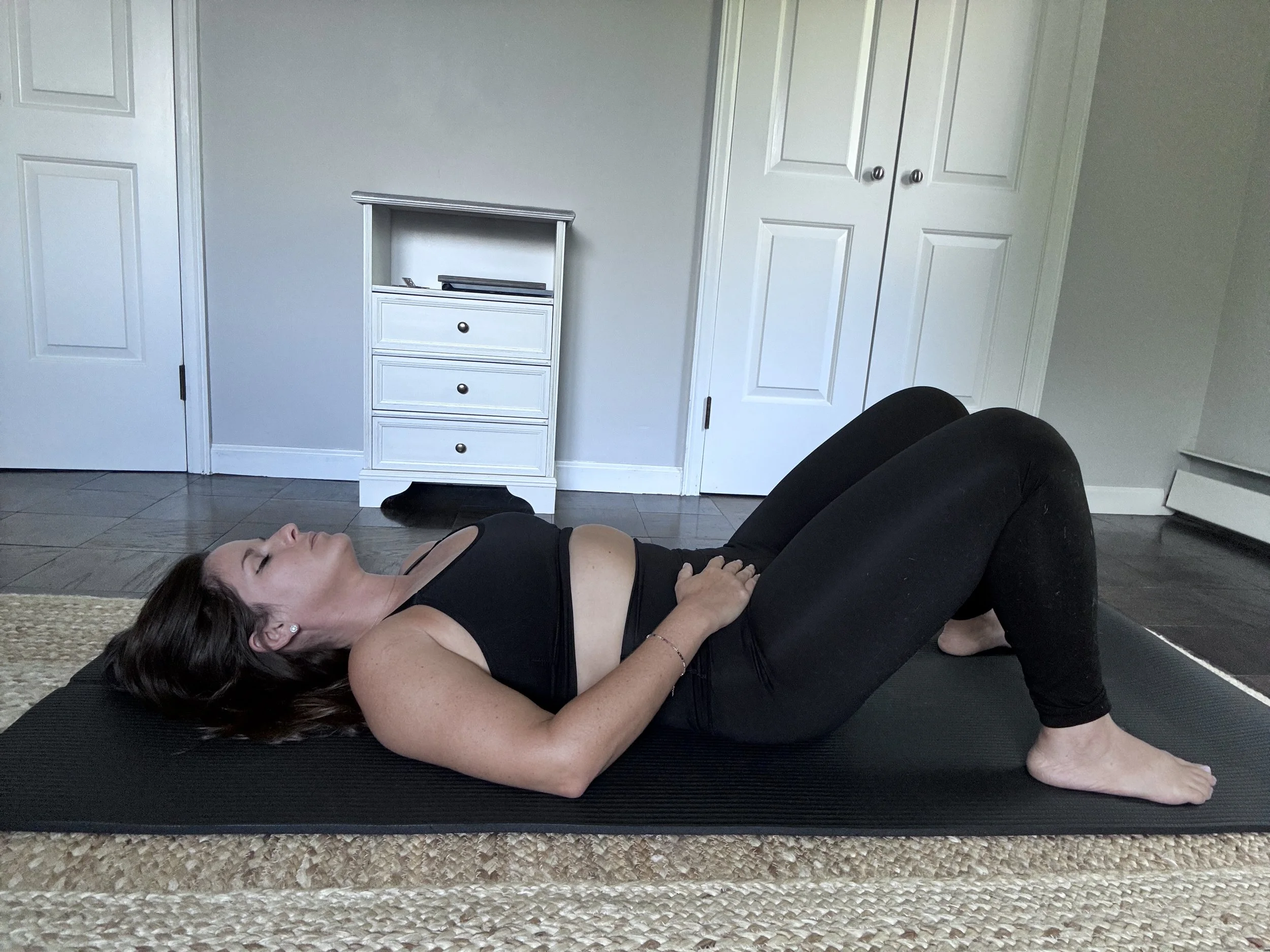
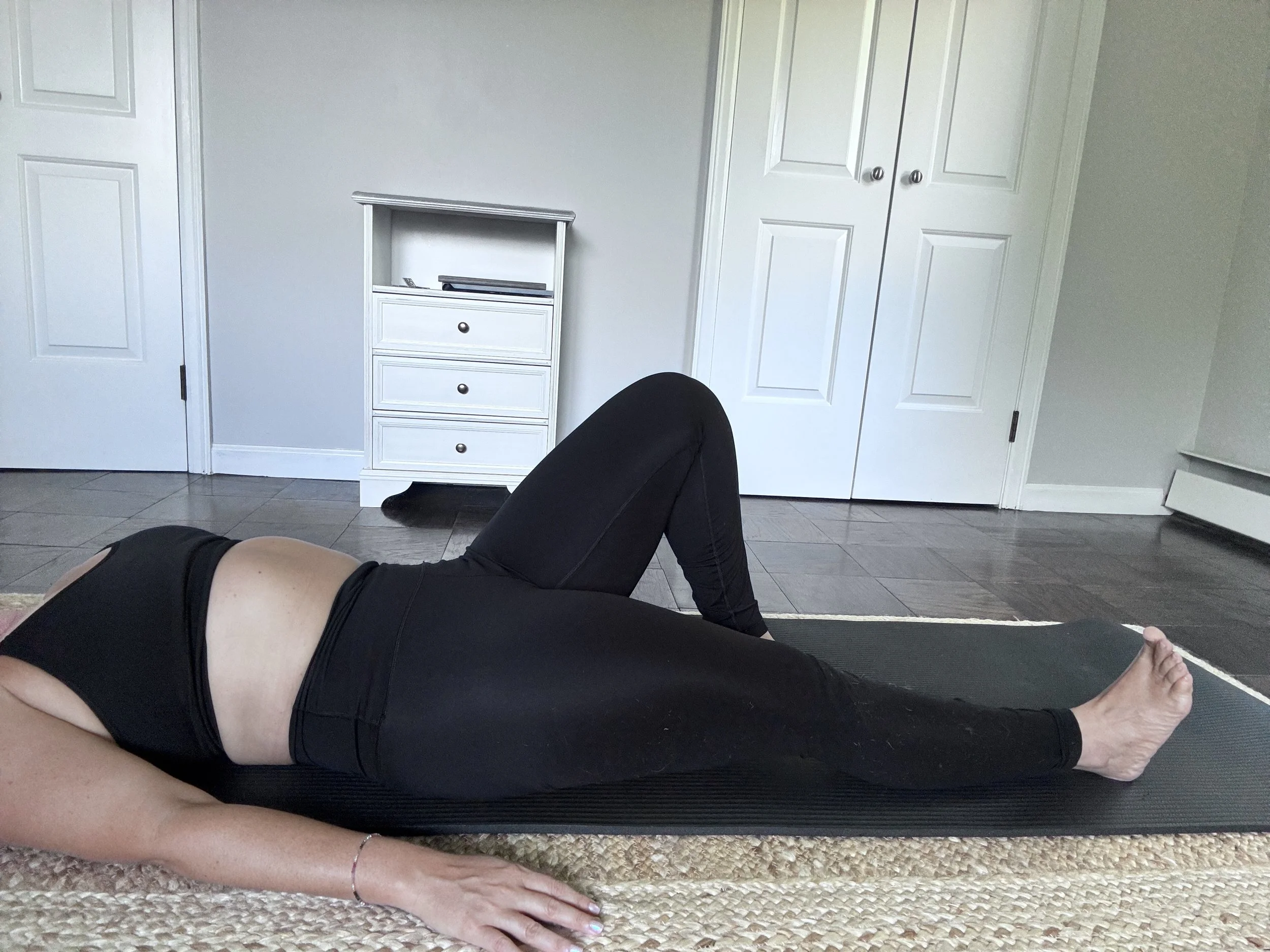
Lie on your back with your knees bent and feet flat. This is called the Constructive rest Position or “CRP”.
Before you move anything, notice:
Does one side of your lower back press more firmly into the floor?
Does one hip crease feel more compressed than the other?
When you slide one heel forward:
Does your lower back lift?
What engages first?
Where is the work happening?
Are both sides using the same strategy?
This the SOM Protocol: Sense. Organize. Move.
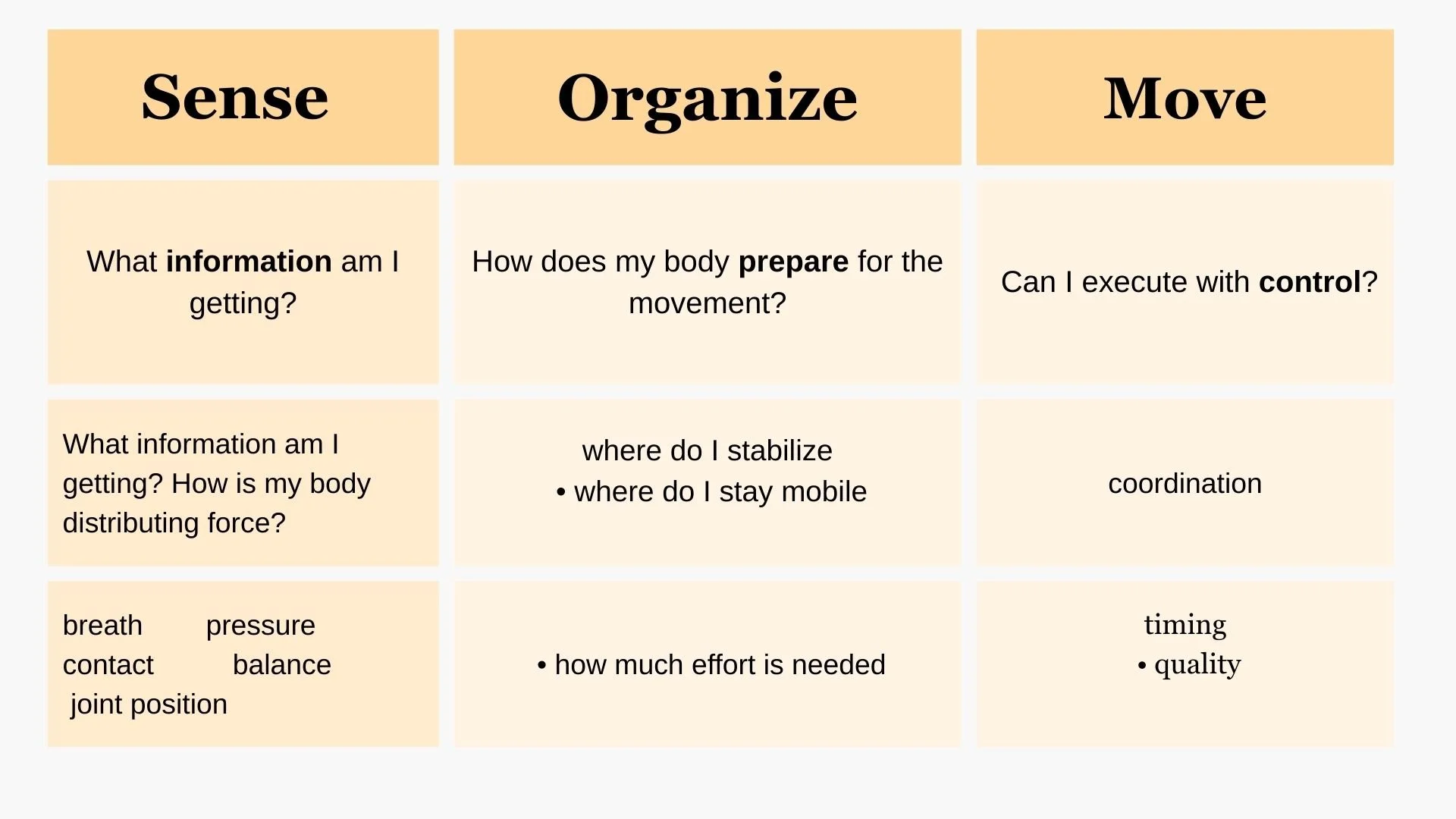
The SOM Protocol
Sense first.
Organize second.
Then move.
Before You Stretch Again
If you’ve been stretching your hip flexors for years and nothing has changed, it may not be a flexibility problem. It may be a sensation problem.
If you can’t clearly feel the psoas, you can’t organize it. And if you can’t organize it, movement defaults to compensation.
Real change starts with sensing. Clarity first. Organization second. Movement third.
If this resonates, start by taking the Body Quiz to identify your compensation pattern. From there, I’ll guide you through the right next step.
If this resonates and you’d like guidance through your journey, I teach these tools in depth through private sessions and in my classes in Sea Cliff, NY. I also share deeper breakdowns and upcoming workshops in my weekly 3C Insider Movement Newsletter.
Work with Me/Questions